

As editorial operations mature, it’s no longer bizarre for publishing workflows to turn out to be fragmented all over teams, processes, and techniques, rising problems with friction that can be difficult to unpick.
The results are felt during the entire publishing journey.
Fragmented workflows slow editorial teams, impede collaboration, and create inconsistencies in how content material subject matter is reviewed, licensed, and published.
While the ones hard eventualities would possibly seem operational, they can ultimately affect editorial top of the range, publishing tempo, and a newsroom’s talent to scale.
The answer isn’t necessarily to change each and every device or power each and every staff into the identical process. It’s to create a attached editorial workflow—person who brings other folks, content material subject matter, compliance, and publishing strategies together, so that teams can switch sooner without sacrificing control or top of the range.
What causes fragmented publishing workflows
Fragmentation isn’t maximum frequently the result of poor tech picks.
Additional forever, it’s the result of enterprise publishers briefly adapting to changing prerequisites while keeping the people, processes, and techniques that continue to reinforce the business.
As enterprise newsrooms evolve, they introduce new tools, processes, and ways of running to reinforce changing editorial, industry, and operational needs. Every addition will build up the number of shifting parts thinking about publishing, making editorial workflows tougher to coordinate.
Every answer solves a direct need, alternatively over time, editors can to search out themselves chasing feedback all over email correspondence, Slack, and spreadsheets simply to move one story towards e-newsletter.
The ‘sticky-taped stack’ is what happens when years of plugins, integrations, and workarounds turn out to be the publishing platform. It’s no longer just a technical headache; it’s costing publishers time, money, and growth.
—Jason Konen, Director, Product, WP Engine
Additional subtle publishing processes
Publishing workflows broaden to include additional evaluation stages. Content material subject matter that when moved at once from editor to e-newsletter would possibly now pass by means of legal evaluation, accessibility exams, search engine optimization validation, brand approvals, and audience teams previous than it’s ready to submit.
Every additional stage is obtainable for a legitimate reasons why, helping publishers support top of the range, content material subject matter governance, or compliance. Collectively, then again, they make publishing workflows longer and additional difficult to control.
Different editorial workflows all over teams
Editorial workflows turn out to be further a lot of as teams broaden, publishers free up new producers, make larger into new markets, or succeed in additional publications. Teams extend processes that copy their own editorial structures, duties, and publishing priorities.
The ones localized workflows forever artwork neatly in isolation, alternatively all over a larger publishing staff, they can turn out to be difficult to align, making it harder to standardize editorial processes, deal with visibility, and observe governance repeatedly.
Emerging ecosystems of specialist publishing tools
Enterprise newsrooms moreover rely on a emerging range of publishing device. Alongside a newsroom CMS, teams would possibly use separate platforms for collaboration, digital asset keep watch over, search engine optimization, accessibility, analytics, and other editorial functions, every designed to reinforce a decided on part of the publishing process.
Introducing specialist tool forever improves explicit individual workflows. The cumulative have an effect on, then again, is where fragmentation begins.
As further tools are adopted, content material subject matter moves between multiple platforms, teams, and approval processes, making editorial workflows harder to coordinate, observe, and standardize, even where each and every explicit individual device performs exactly as meant.
The actual worth of fragmented workflows
Along side the emerging financial costs of imposing and maintaining multiple workflows, they can create bottlenecks which could be forever difficult to identify until they begin to affect editorial capability.
They don’t at all times stem from number one technical screw ups or inefficient teams. Additional forever, they emerge when frequently publishing movements turn out to be disconnected from one each different.
| Fragmentation | Editorial bottleneck | Operational have an effect on |
| Content material subject matter is managed all over multiple publishing strategies | Decreased visibility | Publishing slows as editors spend time discovering content material subject matter and tracking construction |
| Images and flicks are stored one at a time from editorial workflows | Asset keep watch over delays | E-newsletter is in the back of time table while assets are sourced, reviewed, and licensed |
| Editorial top of the range exams rely on processes out of doors of the publishing tool | Disconnected top of the range control | Publishing necessities turn out to be harder to deal with repeatedly all over teams |
| Critiques and approvals occur all over different tools | Guide coordination | Publishing timelines turn out to be harder to control as teams chase feedback and sign-off |
| Editorial picks are shared by means of emails, spreadsheets, and messaging platforms | Disjointed verbal exchange | Collaboration becomes a lot much less setting pleasant as teams reconcile feedback from multiple property |
| Publishing depends upon explicit individual knowledge reasonably than shared workflows | Knowledge silos | Workflows turn out to be further vulnerable to delays when key people are unavailable |
The issue isn’t that enterprise publishers use too many tools. Most specialist strategies transparent up unique editorial needs. The issue is that they’re infrequently designed to artwork as part of a single publishing process.
As wisdom, approvals, and content material subject matter switch between disconnected strategies, coordination turns right into a guide activity reasonably than something the workflow itself is helping.
Standardizing editorial workflows throughout endeavor newsrooms
Managing fragmentation doesn’t imply each crew should paintings in precisely the similar manner. Endeavor publishers want workflows which might be constant the place it counts, whilst permitting particular person groups to house other publishing necessities.
The target isn’t to make each newsroom an identical. It’s to take away the disconnects that create editorial bottlenecks whilst maintaining the versatility had to fortify other manufacturers, content material varieties, and publishing fashions.
Decreasing fragmentation begins through setting up a shared editorial framework. As a substitute of each crew growing its personal publishing procedure, organizations will have to outline a constant strategy to:
- Workflow phases and publishing milestones
- Editorial roles and tasks
- Evaluation and approval processes
- Publishing requirements and governance necessities
This creates a not unusual basis for editorial groups whilst nonetheless permitting flexibility the place it’s wanted.
Embed governance into editorial workflows
Standardization is as a lot an operational problem as a technical one. Publishing gear will have to give a boost to agreed workflows slightly than permitting processes to diverge between groups.
When content material governance, approval phases, editorial tasks, and newsletter necessities are embedded without delay into the workflow, consistency turns into a part of the publishing procedure slightly than one thing that’s enforced later on.
Reinforce visibility around the publishing procedure
Standardized workflows toughen visibility through permitting editors to trace each piece of content material because it strikes throughout the publishing procedure. Transparent possession at each and every degree, at the side of constant evaluations and approvals throughout manufacturers and publications, makes workflows more straightforward to coordinate.
As groups paintings inside of the similar editorial framework, the will for handbook coordination is diminished as a result of possession, development, and subsequent steps are transparent right through the attached editorial workflow.
What editorial workflow device will have to fortify
Editorial workflow device must do much more than simply substitute handbook processes with virtual ones. It will have to assist endeavor publishers organize complicated editorial operations whilst keeping up visibility, consistency, and regulate around the publishing procedure.
Versatile publishing workflows
Endeavor publishers ceaselessly observe a number of publishing fashions, so workflows want to be configurable sufficient to house other manufacturers, content material varieties, approval necessities, and editorial groups with out forcing organizations into inflexible processes that may most probably result in workarounds.
Finish-to-end visibility
Editors will have to be capable of perceive the place content material is within the publishing procedure, who owns the following degree, and which approvals are nonetheless exceptional. With a transparent view of development, groups don’t want to depend on electronic mail trails, spreadsheets, or messaging platforms to coordinate paintings from advent to newsletter.
Embedded governance
Editorial workflow device will have to fortify agreed publishing processes through embedding approval phases, editorial tasks, accessibility assessments, search engine marketing necessities, and newsletter checklists without delay into the workflow. This makes it more straightforward to handle constant editorial requirements with out introducing further handbook oversight or further gear.
Hooked up publishing methods
Editorial workflow device additionally wishes to sit down throughout the wider publishing ecosystem slightly than running in isolation. The purpose is to create a attached publishing setting the place knowledge strikes with the content material, lowering handoffs and serving to paintings development easily between methods.
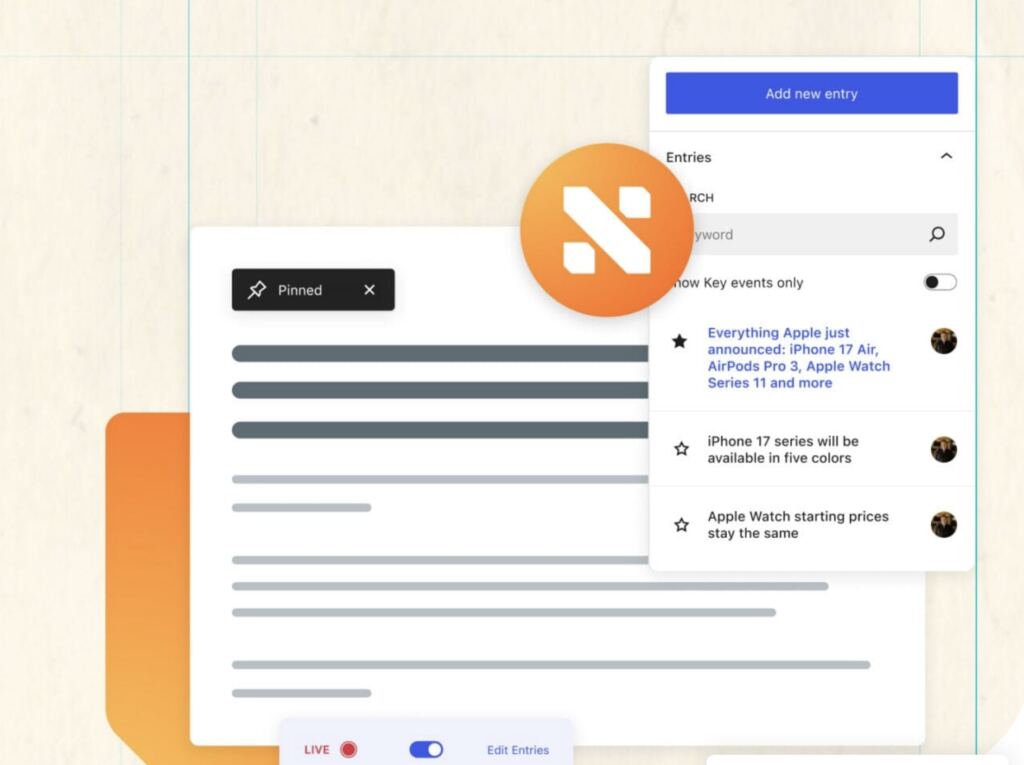
WP Engine Newsroom applies the ones rules through extending WordPress for publishers. As a substitute of depending on disconnected gear and handbook coordination to transport content material ahead, editorial groups can organize evaluations, approvals, multi-author collaboration, and newsletter inside of a unmarried publishing workflow.
Editors get a real-time view of each tale’s development without having to chase updates throughout separate gear, and publishing requirements are ingrained throughout the workflow.
Via bringing the ones actions in combination, endeavor publishers can proceed adapting their editorial operations with out continuously redesigning the publishing procedure. As new groups, gear, and necessities are offered, the workflow supplies a constant basis that assists in keeping content material transferring successfully from advent to newsletter.
The put up Optimizing Fragmented Publishing Workflows for Hooked up Endeavor Newsrooms seemed first on WP Engine®.




0 Comments