

Although ceaselessly considered purely an engineering downside, technical debt has far-reaching consequences for undertaking publishers.
Years of legacy CMS customizations, disconnected publishing tools, overly sophisticated workflows, and a patchwork of aged integrations step-by-step create a publishing setting that’s each and every tricky and expensive to take care of.
Technical possible choices that once solved an immediate need can become long-term barriers to innovation, slowing editorial teams, making content material subject material governance harder to make use of, and delaying the discharge of latest digital experiences.
Left unchecked, technical debt is an ongoing organizational burden.
However, thru addressing it head-on, publishers can’t most simple streamline production however as well as give editorial and engineering teams much more room to pay attention to delivering innovation and great content material subject material.
The telltale signs of technical debt in publishing
Technical debt isn’t defined during the age of a CMS or the selection of integrations a author has. It’s reflected in how tricky it has become to take care of, adapt, and scale publishing tactics and processes.
| Common warning call | What it ceaselessly indicates |
| Information workarounds are part of frequently publishing | Provide workflows have outgrown the platform |
| New must haves automatically need bespoke building | The CMS is difficult to adapt by way of configuration by myself |
| Updates create problems in different places inside the publishing setting | Integrations and customizations have become too interdependent |
| Different producers rely on separate tools or processes | Publishing operations have become fragmented |
| Engineering teams spend overtime maintaining than making improvements to | Technical debt is reducing the potential for innovation |
How legacy CMSs contribute to technical debt
The ones warning signs are in particular not unusual in large-scale organizations with legacy CMSs, where the platform has been adapted to strengthen far more than it was once as soon as to start with designed for.
A newly were given newsletter would in all probability ship every other content material subject material model or digital asset regulate system. Regional teams would in all probability require additional approval stages to fulfill local felony or regulatory must haves, while specialist editorial teams would in all probability need additional metadata, publishing workflows, or integrations with subscription, analytics, or CRM platforms.
Technical debt develops as the ones layers of customization, integration, and process become step-by-step interdependent.
Tech debt is the long term worth of transform created thru choosing “quick-and-dirty” solutions… Each and every hour an engineering team of workers spends fixing conflicts or managing fires resulted in thru a cobbled-together infrastructure is an hour stolen from innovation.
—Jason Konen, Search Engine Mag
Engineering teams then spend overtime propping up provide capacity, protective compatibility with older customizations, testing changes all through connected tactics, and fixing the bugs those changes inevitably introduce.
The (true) operational affect of technical debt
That emerging engineering burden at once impacts editorial teams, ceaselessly making content material subject material governance relying on information checklists, spreadsheets, and tacit knowledge.
| Technical debt issue | Operational affect | Business risk |
| Information governance processes | Editorial teams rely on spreadsheets and information coordination | Higher risk of errors and inconsistent publishing necessities |
| Intensive platform customizations | Routine changes take longer to put in force | Slower response to editorial and trade priorities |
| Interdependent integrations | Each and every trade requires additional testing and coordination | Higher maintenance costs and slower building |
| Fragmented publishing workflows | Different teams art work in a large number of ways | Duplication, inconsistency, and lowered visibility |
| Limited platform flexibility | New purposes are slower to introduce | Reduced talent to innovate and compete |
The affect becomes even clearer when publishers wish to adapt in short to changing target audience behaviors and new distribution channels.
Newsrooms are in truth competing for attention all through social platforms, author ecosystems, and AI-driven search and discovery experiences. Supporting those changes requires a publishing platform that makes it more straightforward to refine editorial workflows, free up new formats, introduce new purposes, and standardize highest practices across the workforce.
Technical debt reduces that flexibility.
Projects intended to strengthen target audience engagement or give a boost to editorial operations become more difficult to plot, slower to send, and harder to put in force constantly all through producers and teams.
Moderately than enabling innovation, debt-heavy publishing environments make trade step-by-step more expensive and difficult.
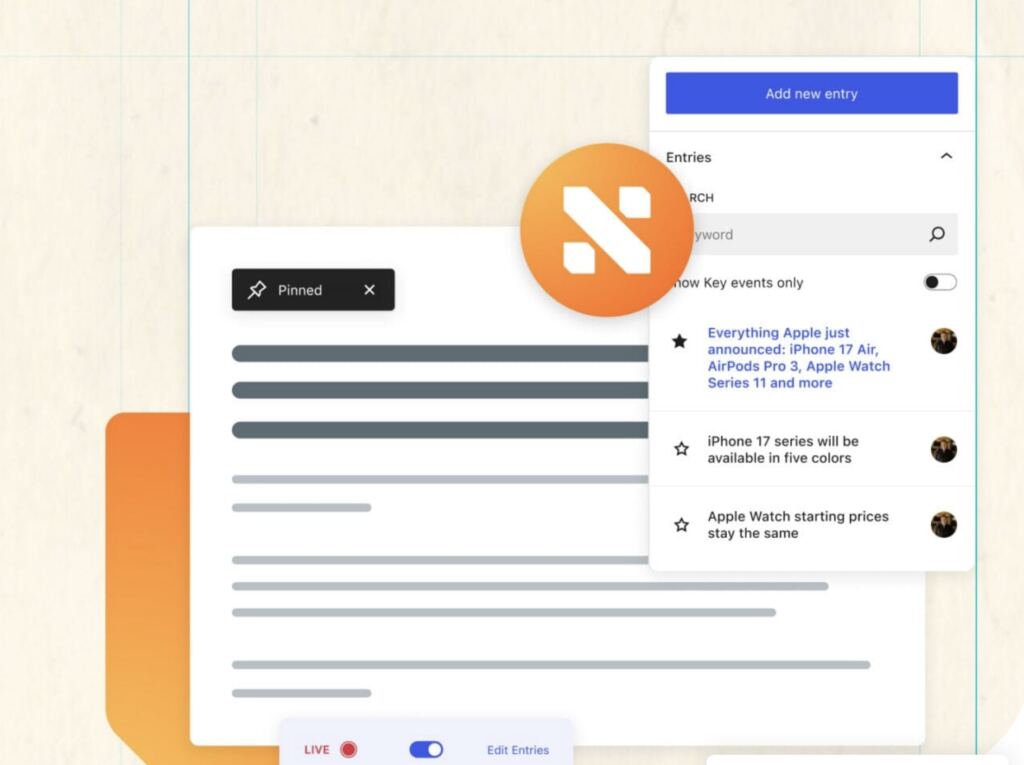
Reduce technical debt without disrupting content material subject material teams
Modernizing your publishing platform isn’t on the subject of converting legacy generation. WP Engine Newsroom helps publishers streamline editorial operations with connected workflows, built-in governance, and the flexibility to evolve as publishing must haves trade.
How one can cut back technical debt with CMS modernization
CMS modernization supplies venture publishers with a possibility to scale back technical debt, however changing a legacy platform on my own received’t clear up the issue. Lasting enhancements come from simplifying complexity, protecting the functions that proceed to ship price, and opting for a publishing platform that may adapt as editorial and industry necessities evolve.
Problem present complexity
For venture publishers suffering with bloated techniques, changing a legacy CMS supplies a possibility to reconsider years of collected customizations, workflows, integrations, and governance processes.
Fairly than routinely recreating the present atmosphere, organizations must be certain the following technology of the publishing platform is constructed round present editorial and industry priorities, no longer historic technical boundaries.
Prioritize functions that also ship price
Many customizations proceed to ship authentic price and stay crucial to day by day publishing. Others exist as a result of they solved an issue that now not exists, duplicated capability that’s now to be had somewhere else, or supported workflows that experience since modified.
Figuring out which functions proceed to ship price, and which upload not anything greater than overhead, prevents pointless complexity from being carried right into a modernized platform.
Spend money on a CMS that contains alternate
The selected CMS additionally performs the most important position in fighting technical debt from returning. Undertaking publishing device must allow you to accommodate alternate via configurable workflows, structured content material control, extensible APIs, and governance that’s embedded without delay into the manufacturing procedure.
New editorial necessities and business priorities must be accommodated with out depending on any other spherical of bespoke construction, disconnected gear, or guide workarounds.
Construct for steady evolution
CMS modernization must even be considered as a possibility to undertake a extra disciplined strategy to product construction, as new integrations, customizations, and publishing workflows will all the time be presented as organizations evolve.
The target isn’t to keep away from alternate, however to verify each and every new requirement is evaluated no longer simplest for the instant industry price it delivers, but in addition for whether or not it strengthens the publishing platform or introduces avoidable overhead.
Opting for an venture publishing platform constructed for scale
The most efficient venture publishing platforms proceed supporting new editorial workflows, industry priorities, publishing channels, acquisitions, and target market expectancies with out forcing publishers to repeatedly rebuild the best way they paintings.
That’s why platform variety must focal point as a lot on how the CMS contains alternate because the options it gives on day one.
Platform evaluation tick list
When comparing an venture publishing platform, publishers must assess no longer simplest the functions it gives, but in addition how the ones functions are delivered:
 Can publishing workflows be configured with out customized construction?
Is publishing governance embedded into the editorial procedure via configurable evaluation phases, e-newsletter checklists, and revision histories?
Can more than one manufacturers and editorial groups paintings persistently inside the similar gadget whilst nonetheless supporting authentic operational variations?
Are collaboration, virtual asset control, analytics, and structured content material control constructed into the publishing revel in somewhat than unfold throughout disconnected techniques?
Can new editorial necessities be accommodated via configuration somewhat than bespoke construction?
Will the platform proceed to enhance new publications, acquisitions, and publishing channels because the group evolves?
The solutions to these questions have an immediate referring to how sustainable the CMS will likely be.
Supporting long-term editorial expansion
Each new e-newsletter, acquisition, content material structure, business initiative, or regulatory requirement puts new calls for at the publishing platform. If accommodating the ones adjustments depends upon bespoke construction, disconnected gear, or guide workarounds, technical debt continues to stack up.
The place the ones functions are already a part of the platform, publishers are some distance higher positioned to adapt with out frequently repatching the rules that enhance editorial operations.
WP Engine Newsroom is designed with that function in thoughts, extending WordPress for publishers with an enterprise-ready platform evolved particularly for massive publishing organizations.
Editorial workflow device, configurable evaluation phases, e-newsletter checklists, editorial feedback, revision histories, publishing governance, virtual asset control integration, analytics, content material modeling, and multi-brand publishing are introduced collectively inside a unified editorial platform.
Fairly than assembling the ones functions via bespoke construction and disconnected level answers, publishers can organize them inside a unmarried atmosphere purpose-built for newsrooms.
That provides editorial and engineering groups a publishing atmosphere that may stay tempo with the industry.
New workflows, governance necessities, publications, and industry priorities will also be presented via configurable platform functions somewhat than any other cycle of customized construction, permitting publishers to make bigger with out repeating the choices that create technical debt.
FAQs on technical debt in publishing
Can technical debt be decreased with out changing a legacy CMS?
In some instances, sure. Retiring out of date customizations, simplifying workflows, consolidating gear, and bettering governance can all assist cut back technical debt. Then again, the place a legacy CMS has turn out to be closely custom designed or fragmented, CMS modernization would possibly supply a simpler long-term resolution through changing collected workarounds with configurable platform functions.
What must publishers search for in an venture CMS for media?
An venture CMS for media must do greater than organize content material. It must enhance configurable editorial workflows, embedded publishing governance, structured content material control, multi-brand publishing, collaboration, and extensible integrations, permitting publishers to introduce new editorial and industry necessities with out depending on chronic bespoke construction. The target is to provide editorial and engineering groups the versatility to evolve whilst keeping up constant publishing requirements around the group.
When does a multi-site publishing platform turn out to be essential?
A multi-site publishing platform turns into more and more treasured when publishers are managing more than one manufacturers, regional editions, or specialist publications that want constant governance whilst supporting other editorial workflows. Managing the ones operations inside a shared platform is helping standardize publishing processes, cut back duplicated effort, and simplify the advent of recent publications with out keeping up separate CMS implementations.
The submit Technical Debt in Undertaking Publishing: The Actual Have an effect on and How Trendy CMS Is helping gave the impression first on WP Engine®.




0 Comments