

At small scale, a large number of the system that is helping the content material materials lifecycle can keep informal.
An editor remembers who should approve a story. A spreadsheet tracks assignments. Writers draft in bureaucracy forward of any individual transfers the finished copy into the CMS. Target market teams pull potency research one at a time.
If something stalls, any individual sends a message and divulges out why.
As publishing grows, those informal connections turn into more difficult to take care of.
Handoffs, necessities, compliance must haves, distribution workflows, and fragmentation begin to pile up. Processes that once relied on a few professional other people begin to depend on constant coordination.
Content material materials operations is how organizations deliberately design that system.
This knowledge goes previous defining content material materials operations. Use it to:
- audit how your publishing operation works at the present time,
- resolve where it breaks down,
- design a better working type,
- select the right era,
- establish useful measurements,
- and scale the craze all through teams, producers, and markets.
What’s content material materials operations?
Content material materials operations is the coordinated system of other people, processes, era, governance, and measurement used to keep an eye on content material materials all over its lifecycle.
That lifecycle begins forward of a draft exists and continues after publication.
It accommodates planning, prioritization, introduction, collaboration, analysis, approval, publication, distribution, measurement, optimization, upkeep, reuse, and retirement.
This makes content material materials operations different from two an identical disciplines.
Content material materials methodology determines what an organization should create and why. It defines audiences, targets, topics, formats, channels, positioning, and meant effects.
Content material materials keep an eye on handles the content material materials itself. It focuses on how content material materials and assets are structured, stored, organized, retrieved, printed, up-to-the-minute, and maintained, continuously by way of ways an identical to a CMS or digital asset keep an eye on platform.
Content material materials operations makes the process executable. It determines who does the artwork, how artwork moves, which rules follow, which era is helping each point, how teams coordinate, and the best way results feed once more into future picks.
| Core question | Typical focus | Typical outputs | |
| Content material materials methodology | What should we create and why? | Target market, targets, topics, formats, channels | Method, priorities, editorial plans |
| Content material materials keep an eye on | How are we able to organize and organize the content material materials? | Development, storage, taxonomy, assets, publishing | Content material materials models, CMS buildings, taxonomy |
| Content material materials operations | How are we able to execute constantly at scale? | Ownership, workflow, governance, era, measurement | Running type, workflows, controls, stack, KPIs |
Every staff that publishes already has content material materials operations.
They just exist as gathered conduct: the spreadsheet one staff maintains, the Slack message required to get approval, the one that is conscious about which metadata fields matter, the plugin installed years prior to now to get to the bottom of one publishing requirement, and the per 30 days analytics document nobody uses in every single place planning.
The purpose of content material materials operations isn’t because of this truth so that you could upload a brand spanking new administrative strength of will spherical content material materials.
It’s to make the present working system visible, intentional, measurable, and improvable.
Why are trendy content material materials operations crucial?
The Reuters Institute Virtual Information Document 2026, based on insights from nearly 100,000 other people all through 48 markets, highlights a variety of challenging eventualities that make well-organized content material materials operations more and more crucial.
Adapt to changing target audience behavior
For the principle time, social media and video networks have overtaken author internet pages and apps as weekly property of stories, achieving 54% of respondents in comparison with 51% for publisher-owned channels.
As readers discover stories all through further platforms, publishing teams need workflows that support different formats, distribution channels, and get entry to problems. Structured content material materials and reusable editorial parts display you the way to adapt coverage without rising totally separate production processes.
Care for top of the range and editorial believe
Global believe in knowledge has fallen to 37%, while 62% of respondents are passionate about distinguishing exact wisdom from wrong knowledge online.
For publishers, this makes consistent editorial necessities and transparent publishing practices in particular crucial. Content material materials operations helps embed fact-checking, provide attribution, approvals, corrections, and other governance must haves into regularly workflows slightly than relying on specific individual individuals to keep an eye on them independently.
Reinforce publishing tempo and coordination
The emerging name for for video and regularly up-to-the-minute coverage supplies every other layer of complexity to editorial production. Reuters research that 77% of respondents watch online knowledge video weekly, highlighting how crucial multimedia has turn into to the publishing revel in.
Supporting the ones formats continuously requires closer coordination between editors, journalists, designers, video producers, and era teams. Clear duties, hooked up workflows, and no more guide handoffs lend a hand organizations produce and change content material materials effectively without compromising top of the range.
Make upper content material materials and target audience picks
Very best 17% of respondents pay for online knowledge across the 20 markets tracked for subscriptions, a proportion that has remained unchanged from the previous 12 months.
With reader income beneath energy, publishers need to understand which stories and experiences encourage other people to return, engage, join, or subscribe. Content material materials operations connects target audience insights with editorial planning, serving to teams make further an expert picks about content material materials priorities, formats, and helpful useful resource allocation.
Scale publishing without together with unnecessary complexity
The ones challenging eventualities turn into more difficult to keep an eye on as organizations make larger all through publications, producers, markets, and distribution channels. Without shared processes, teams can after all finally end up duplicating artwork, maintaining inconsistent necessities, and relying on disconnected apparatus.
A well-defined content material materials operations type helps organizations establish now not extraordinary workflows, governance, and measurement practices while giving specific individual teams the flexibility to serve their audiences and editorial priorities.
How content material materials operations connect the content material materials lifecycle
A useful content material materials operations type covers your entire lifecycle slightly than optimizing content material materials introduction in isolation:
- Planning and prioritization
- Content material materials introduction
- Evaluation and approval
- Publish and distribution
- Content material materials potency
- Optimization and maintenance
Each and every point answers a definite operational question.
| Lifecycle point | Operational question | Typical output |
| Plan and prioritize | What deserves property now? | Authorized pipeline |
| Create | What does the contributor need to produce it? | Working content material materials |
| Evaluation | Is it proper, useful, whole, and on-standard? | Editorially approved content material materials |
| Approve | Does it meet required specialist or governance controls? | Authorized content material materials |
| Publish and distribute | Where, when, and beneath whose authority does it pass stay? | Revealed content material materials |
| Measure | Did it achieve its meant target audience or business consequence? | Potency belief |
| Optimize and take care of | What should trade after publication? | Up-to-the-minute or repurposed content material materials |
| Retire | Does this content material materials nevertheless wish to exist? | Redirected, archived, consolidated, or removed content material materials |
The crucial word is connects.
Each and every lifecycle point is made up our minds by way of wisdom and picks made elsewhere. A writer needs the prerequisites agreed in every single place planning, an editor needs to grasp when a draft is ready, and serve as insights need to inform future commissioning picks.
Content material materials operations makes those dependencies visible and promises wisdom, ownership, and picks switch constantly from one point to the next.
What does a content material materials operations framework include?
A content material materials operations framework defines how other people, processes, era, governance, and measurement artwork together all over the content material materials lifecycle. It supplies teams a shared working type slightly than leaving each function to extend its private processes.
| Part | What it defines |
| Workflows | How content material materials moves from request by way of publication and maintenance. |
| Roles and ownership | Who creates, critiques, approves, publishes, and maintains content material materials. |
| Governance | Which editorial, logo, accessibility, jail, and compliance must haves follow. |
| Era | Which ways support publishing, where wisdom lives, and the best way apparatus connect. |
| Size | How teams overview operational efficiency and content material materials potency. |
The following sections walk by way of learn how to audit, design, implement, and enhance each part.
How you can audit your fresh content material materials operations
Previous than redesigning the remainder, establish how content material materials in truth moves at the present time. Don’t get started with a workshop where stakeholders draw the process they believe should exist. Get started with evidence from now not too way back completed artwork.
Step 1: Choose guide content material materials
Make a choice from 5 and ten now not too way back printed items.
Include enough variation to turn different processes. For an challenge author, that would possibly include:
- a routine editorial article;
- a time-sensitive story;
- an evergreen or SEO-led article;
- content material materials requiring jail or compliance analysis;
- a multimedia-heavy piece;
- content material materials involving an external contributor;
- content material materials printed all through a few internet sites or markets.
Don’t select only a luck tasks. Include no less than one products that was once behind schedule, required really extensive rework, or led to confusion.
Step 2: Reconstruct what took place
For each content material materials products, trace the true process from the initial request or idea by way of publication.
Use the diagnostic table underneath to tell apart between 4 now not extraordinary property of friction:
- unclear ownership,
- inefficient handoffs,
- disconnected ways,
- and unnecessary or behind schedule approvals.
| Degree / owner | Precise workflow / apparatus | Vigorous time / wait time | What went wrong? | Probably cause | Have an effect on |
| Transient · Managing editor | Idea approved in planning instrument; brief created one at a time | 2 hrs / 1 day | Writer requested missing details | No customary brief must haves | Grow to be; behind schedule get began |
| Draft · Writer | Draft written in Google Clinical docs | 2 days / 0.5 day | Writer waited for rationalization | Incomplete brief; unclear answer owner | Out of place writing time |
| Editorial analysis · Editor | Draft shared in Clinical docs; notification sent in Slack | 1 hr / 1 day | Editor disregarded initial request | Information handoff; no analysis queue | Evaluation lengthen |
| Legal analysis · Legal | Claims sent by means of email; approval returned in thread | 30 min / 2 days | Group couldn’t see approval status | No shared approval tracking | Blocked downstream artwork |
| CMS production · Producer | Authorized copy transferred from Clinical docs into WordPress | 2 hrs / 0 hrs | Metadata and formatting re-entered | Disconnected apparatus; copy get entry to | Information effort; error likelihood |
| Final sign-off · Editor | Preview shared in Slack; approval given in chat | 15 min / 3 hrs | Producer waited for sign-off | Approval not tied to workflow status | Publishing lengthen |
| Publish · Producer | Article printed in WordPress | 15 min / 0 hrs | No issue spotted | — | — |
Report what in truth took place. Instead of simply reporting “Legal analysis took two days”, the diagnostic should disclose:
- Spotted problem: The item waited two days for jail approval.
- Root-cause hypothesis: The approval request was once handled by way of email, and not using a shared visibility or escalation rule.
- Have an effect on: CMS production couldn’t proceed, pushing publication once more.
- Attainable construction: Introduce tracked approvals, clear analysis ownership, and agreed turnaround expectations.
One additional recommendation: Whilst you’ve documented no less than 5 guide content material materials items, evaluation the findings. Seek for regimen bottlenecks, not merely the biggest lengthen in a single article.
Step 3: Interview the people doing the artwork
The consideration between a root-cause hypothesis and a verified cause problems.
Talk about in my view to no less than one guide from each function that incessantly touches the workflow to grab the why in the back of bottlenecks.
Ask everyone the an identical questions:
- What tells you it’s your turn to act?
- What wisdom do you want forward of you’ll get began?
- Where do you get that wisdom?
- Which ways do you use?
- What wisdom do you manually copy or recreate?
- What typically makes you wait?
- Whose input or approval do you want?
- What happens if that specific isn’t available?
- Which artwork do you incessantly do outdoor the decent process?
- What problem does that workaround transparent up?
- In the event you would possibly need to remove one administrative step the next day to come, which wouldn’t it now not be?
Interview practitioners along with managers. The person producing articles in WordPress every day would most likely learn about 5 repetitive steps that in no way appear on a process diagram.
Transfer deeper: The way to Give a boost to Editorial Workflow Potency for Undertaking Publishers
How you can enhance your content material materials operations workflow
Your audit revealed where content material materials gets behind schedule, duties overlap, and processes spoil down. The next step is to stipulate how your content material materials operations should artwork.
Previous than choosing apparatus or automating tasks, establish 3 foundations: clear ownership, appropriate governance, and a workflow that connects other people, picks, and methods.
Define ownership and approval duties
Get began by means of clarifying who does the artwork, who provides enjoy, who approves it, and who owns the outcome.
A reviewer provides feedback or specialist knowledge. An approver has the authority to authorize the next point. Difficult the ones duties can create unnecessary delays and endless revision cycles.
Use a content material materials ownership matrix to document answer rights all through your number one content material materials types.
| Content material materials sort | Editorial owner | Specialist analysis | Final approval | Publishing authority |
| Daily knowledge | Assigned editor | Conditional | Desk editor | Producer/editor |
| Product article | Editor | Product/jail | Content material materials lead | Publishing staff |
| Investor change | Corporate editor | Legal/IR | Authorized executive | Restricted serve as |
| Evergreen knowledge | Editor | SEO/SME | Content material materials lead | Publishing staff |
For each approval, establish an expected turnaround time, a backup decision-maker, and an escalation route when critiques stall or stakeholders disagree. The aim: Every answer has a clear owner, and no content material materials gets stuck on account of nobody is conscious about who can switch it forward.
Determine governance must haves based on content material materials likelihood
Content material materials governance determines which necessities and approvals follow to different types of content material materials. Not every article needs the an identical level of oversight.
Define must haves consistent with the imaginable likelihood:
| Likelihood level | Content material materials example | Required controls |
| Usual | Routine editorial content material materials | Editorial analysis and publication checklist |
| Higher | Industry, branded, or product content material materials | Editorial and specialist analysis |
| High | Regulated or market-sensitive content material materials | Restricted permissions, vital specialist approval, controlled publication |
For each content material materials sort, document the required necessities, vital and conditional critiques, publishing permissions, and post-publication duties.
Distinguish between vital controls that block publication, conditional controls caused by means of specific risks, and advisable practices that support top of the range without rising unnecessary approval levels.
Apply the lightest environment friendly keep watch over. A formatting want would most likely only need a checklist, while a jail requirement would most likely need a vital approval. Governance should moreover quilt what happens after publication, along side content material materials critiques, updates, expiration, and archiving.
Transfer deeper: Content material Governance: A Framework for Consistency, Compliance, and Content material at Scale
Design your future-state workflow
Now combine your audit findings, ownership picks, and governance must haves proper right into a workflow that eliminates unnecessary handoffs and makes construction more uncomplicated to track.
For each point, define the prerequisites that allow artwork to enter, the actions required, and what is going to need to happen forward of it moves forward.
Use this workflow specification as your starting point:
| Field | What to stipulate |
| Degree and owner | What happens proper right here, and who’s responsible? |
| Get admission to requirements | What’s going to must be whole forward of artwork begins? |
| Required actions | What tasks, checks, or approvals must happen? |
| Cross out requirements | What confirms the content material materials is in a position to construction? |
| Expected time | How long should the extent take? |
| Notifications | Who needs to grasp when the status changes? |
| Automation possible choices | What repetitive actions might be automatic? |
| Exceptions and escalation | What happens when the usual process fails? |
For example, an editorial analysis shouldn’t get started until the draft, supporting property, and required metadata are whole. It shouldn’t end until editorial necessities are met, exceptional issues are resolved, and the most efficient editor approves the content material materials.
Use your audit findings to downside unnecessary steps and regimen backward loops. If jail incessantly flags claims after production, introduce the required analysis earlier. If metadata is over and over re-entered, resolve where wisdom would possibly go with the flow between ways.
As quickly because the workflow is defined, resolve where notifications, approval routing, required-field checks, or lifecycle reminders would possibly scale back guide coordination.
Transfer deeper: The way to Construct a Multi-Level Editorial Approval Workflow
Assemble a content material materials operations methodology and roadmap
The next step is deciding what to tackle first. Not every problem deserves the an identical attention, and a couple of changes depends on others being in place. A content material materials operations methodology helps connect those improvements to business priorities and turn them into a wise implementation plan.
Translate business goals into operational must haves
Get began with what the crowd is making an attempt to succeed in and artwork backward to the publishing purposes needed to support it. This assists in keeping content material materials operations serious about business effects slightly than process improvements for their own sake.
Imagine following this manner:
| Industry function | Publishing implication | Operational requirement | Initiative |
| Enlarge into 3 regional markets | Additional individuals and localized content material materials | Shared governance with regional flexibility | Determine an international content material materials type, regional permissions, and localization workflows |
| Broaden digital subscriptions | Upper understanding of what drives loyalty and conversion | Content material materials potency insights that inform editorial picks | Connect content material materials analytics with planning and commissioning |
This moreover makes it more uncomplicated to provide an explanation for why an operational trade problems to stakeholders who aren’t keen on regularly publishing.
Prioritize the problems from your audit
Your audit will in all probability disclose further problems than you’ll take care of directly. Evaluation each one in opposition to five requirements to identify where improvements will have the most efficient have an effect on.
- Frequency: How continuously does the problem occur?
- Have an effect on: How so much time, top of the range, or selection does it have an effect on?
- Likelihood: What are the consequences when something goes wrong?
- Reach: What choice of teams or content material materials items are affected?
- Effort: How tricky or resource-intensive is the restore?
A regimen bottleneck affecting a number of articles would most likely justify fast attention, while an occasional inconvenience can wait.
However, a miles much less in style issue involving jail compliance or publishing protection would most likely deserve higher priority because of its possible consequences.
Separate foundations from enhancements
Some improvements can send price in short, while others depend on picks about ownership, governance, or era. Organizing tasks into 3 layers helps steer clear of investing in subtle purposes forward of the underlying processes are ready.
| Layer | What it accommodates |
| Foundation | Ownership, workflow definitions, governance rules, taxonomy, content material materials models, and measurement definitions |
| Enablement | Integrations, permissions, templates, dashboards, workflow automation, and system configuration |
| Optimization | Advanced automation, AI lend a hand, predictive analysis, experimentation, and extra consolidation |
For example, there’s little price in automating approvals forward of agreeing who has approval authority, or construction dashboards forward of defining what excellent fortune seems like. The gathering problems on account of each layer should make the next but any other environment friendly.
Assemble a 90-day first section
Slightly than attempting to redesign content material materials operations all through all of the staff, make a selection one workflow where improvements will also be performed and measured inside of an reasonably priced timeframe. A 90-day first section supplies teams enough time to analyze the problem, introduce changes, and learn from exact publishing procedure.
| Timeline | Focus | Key movements |
| Days 1–30 | Diagnoze | Audit the prevailing workflow, establish baseline metrics, provide an explanation for ownership, and resolve governance must haves |
| Days 31–60 | Design | Define the future-state workflow, agree on get entry to and cross out requirements, establish era must haves, and configure or prototype changes |
| Days 61–90 | Pilot | Train a specialist workforce, test the workflow with exact content material materials, measure results, acquire feedback, and resolve issues forward of accelerating |
For each initiative, document the problem, proposed trade, expected consequence, excellent fortune metric, and analysis date. This gives teams a wise strategy to overview whether or not or now not an construction delivered the meant finish consequence.
Audit your content material materials operations era stack
Along side your working must haves and priorities defined, you’ll assess whether or not or now not your provide era is helping the best way wherein teams need to artwork. The objective isn’t necessarily to scale back the number of apparatus, alternatively to grab where ways add price, where they overlap, and where disconnected processes create unnecessary artwork.
Inventory every system involved
Get began by means of documenting the platforms and gear used across the content material materials lifecycle, along side unofficial solutions teams can have adopted to artwork spherical stumbling blocks throughout the approved stack.
| Field | What to document |
| Objective and ownership | What the system does, who owns it, and which teams use it |
| Lifecycle serve as | Which levels of content material materials operations it is helping |
| Wisdom and system of record | What wisdom it manages and whether or not or now not it’s the authoritative provide |
| Inputs and outputs | What wisdom enters the system and where it’s going next |
| Integrations and guide transfers | How it connects with other apparatus and where other people switch wisdom manually |
| Customization and maintenance | What custom designed configurations exist and who maintains them |
| Functional overlap | Which purposes are also available elsewhere throughout the stack |
Overlapping capacity doesn’t robotically indicate two ways are redundant. For example, a faithful DAM would most likely proportion some choices with the WordPress Media Library while providing much more extensive asset governance, licensing, and distribution purposes.
Map the stack in opposition for your workflows
Next, map each system to the workflow levels you’ve already documented. That is serving to disclose problems that may not be obtrusive when evaluating apparatus in my view.
Seek for:
- Gaps: Processes without excellent sufficient system support.
- Duplication: Tasks or wisdom maintained all through a few apparatus.
- Dead ends: Information that doesn’t go with the flow into the next point.
- Shadow ways: Unofficial apparatus adopted given that provide stack doesn’t meet a bunch’s needs.
- Fragile connections: Information transfers or poorly maintained integrations.
- Unnecessary dependencies: Routine editorial tasks that require engineering support.
Pay particular attention to the transitions between ways. A tool would most likely artwork utterly successfully on its own while rising additional artwork for the crowd that receives its output.
Decide what to stick, enhance, or exchange
Use the findings to get to the bottom of the long term serve as of each system slightly than assuming consolidation is always the most productive consequence.
| Answer | When it’s smart |
| Keep | The system performs a very important function effectively |
| Mix upper | The prospective is efficacious, alternatively wisdom doesn’t switch effectively |
| Consolidate | Every other platform can take over the function without vital loss |
| Trade | The system now not meets operational must haves |
| Retire | The original business requirement now not exists |
| Read about | Additional evidence is sought after forward of you make a decision |
Imagine what will also be out of place along with won by way of consolidation, in particular when specialist ways support must haves {{that a}} elementary publishing platform won’t quilt.
The result should be a era stack where each system has a clear function, duties are understood, and data moves between apparatus without unnecessary guide coordination.
Transfer deeper: The way to Construct a Attached Publishing Generation Stack on WordPress
How you can enhance content material materials operations with WordPress
WordPress supplies built-in purposes for structuring content material materials, managing publishing permissions, and rising reusable editorial parts. Its APIs and extensibility moreover make it conceivable to connect publishing workflows with other ways.
Listed below are a few ways to make upper use of that foundation forward of you imagine introducing other publishing platforms:
- Development content material materials for consistency and reuse. Use publish types, taxonomies, metadata, and custom designed fields to standardize wisdom an identical to authors, topics, content material materials types, and analysis dates. This makes content material materials more uncomplicated to keep an eye on, distribute, and analyze.
- Create reusable editorial parts. Assemble approved block patterns for regimen portions an identical to article introductions, key takeaways, an identical content material materials, and subscription turns on. Editors can artwork inside of established design necessities without relying on developers for routine formatting.
- Align permissions with editorial duties. Configure WordPress roles and purposes spherical who should create, edit, analysis, and publish content material materials. Steer clear of granting broader get entry to than each serve as requires.
- Connect provide publishing apparatus. Use WordPress APIs and integrations to make approved assets, target audience wisdom, and other wisdom available where editors need them in every single place publishing.
- Plan for a few internet sites and distribution channels. Imagine WordPress Multisite where shared infrastructure is smart, and use APIs to distribute structured content material materials to apps, newsletters, and other digital experiences.
- Keep customization manageable. Report the purpose and ownership of custom designed plugins, integrations, and theme capacity so the publishing setting remains maintainable as must haves trade.
How AI fits into content material materials operations
AI can lend a hand publishing teams scale back repetitive artwork, spice up up production, and make upper use of their content material materials and target audience wisdom.
Alternatively its price is made up our minds by way of how successfully it fits into provide workflows. Without clear processes and duties, AI can merely as merely introduce further fragmentation, build up analysis workloads, and create new governance risks.
Understand where AI is already being used
AI adoption continuously happens forward of organizations establish formal insurance coverage insurance policies. Writers would most likely use it for research and drafting, editors for summaries and metadata, and target audience teams for content material materials analysis. A couple of of those apparatus may be approved, while others are used independently by means of specific individual teams.
This creates a gap between how organizations believe AI is being used and what’s in truth happening.
Understanding every decent and unofficial usage provides a clearer symbol of possible choices, dependencies, and risks, in particular when confidential wisdom, copyrighted subject material, or sensitive wisdom is worried.
Focus on smart use instances and human oversight
Provide content material materials governance provides a kick off point for AI, alternatively organizations moreover need to account for instrument approval, sensitive wisdom, copyright, output verification, and human accountability.
The ones must haves should turn into part of established editorial insurance coverage insurance policies and analysis processes slightly than creating a separate set of rules for AI-assisted content material materials.
The aim is to make AI usage visible, controlled, and useful without weakening provide publishing necessities.
Make AI part of your provide governance
AI governance should assemble on the equivalent necessities that knowledge the rest of your content material materials operations. Authorized apparatus, wisdom restrictions, verification must haves, editorial analysis, copyright issues, and escalation procedures all need to are compatible all through the crowd’s broader governance framework.
The objective isn’t to create a separate working type for AI. It’s to introduce automation where it supplies measurable price while maintaining the usual, accountability, and editorial keep watch over that publishing teams already depend on.
Be told next: The Function of AI in Trendy Content material Operations
How you can introduce new content material materials operations without shedding adoption
Operational redesign changes other people’s regularly artwork. Take care of adoption as part of the implementation slightly than something that begins after the new process is done.
Pilot with exact content material materials
Choose a specialist workforce of consumers and ask them to complete exact publishing artwork the usage of the future-state process. Apply them the usage of it.
Record every 2nd where any individual:
- doesn’t know what happens next;
- needs lend a hand finding wisdom;
- leaves the workflow to complete a role;
- recreates an out of date workaround;
- can’t tell whether or not or now not any individual has acted;
- encounters a permission problem;
- skips a required step;
- says the out of date process was once quicker.
Take a look at exceptions deliberately
A cheerful-path test isn’t enough. Run scenarios an identical to:
- approver unavailable;
- urgent publication;
- specialist analysis required;
- contributor lacks publishing permission;
- article needs really extensive revision;
- scheduled content material materials needs changing;
- embargoed content material materials;
- post-publication correction.
The workflow should continue to exist truth, not only the process diagram.
Create role-specific training
Don’t give every stakeholder a tour of every capability. Train other people on the picks and actions their serve as requires.
- A writer should know how to post artwork and respond to feedback.
- An editor should know how to keep an eye on critiques, exceptions, and status.
- A jail reviewer would most likely need only the analysis and approval route.
- A platform administrator needs the configuration type.
Serve as-specific training is more uncomplicated to take in and more uncomplicated to take care of.
Evaluation adoption after free up
At 30, 60, and 90 days, evaluation:
- system adoption;
- workflow of completion;
- time in each point;
- exceptions;
- publishing errors;
- guide artwork happening outdoor the process;
- qualitative individual feedback.
If other people constantly artwork spherical one point, read about why forward of simply enforcing it more difficult.
How you can measure content material materials operations
Content material materials operations measurement needs to answer two separate questions:
- How effectively does our publishing system artwork?
- How effectively does the following content material materials perform?
Don’t collapse them. A gaggle can produce excellent content material materials by way of an unsustainably inefficient process. It should effectively moreover assemble a specifically atmosphere pleasant process for producing content material materials audiences don’t price.
Measure publishing pace
Get began with: Cycle time = Publication time − Workflow get began time
Then spoil cycle time into workflow levels. Track:
- median common cycle time;
- median time by means of point;
- vigorous time versus queue time;
- throughput in keeping with period;
- disregarded points in time;
- artwork returned to previous levels.
Segment by means of content material materials sort. A live-news workflow and a research document shouldn’t have the an identical function.
Measure operational efficiency
Track the chief artwork spherical production:
- guide transfers;
- copy wisdom get entry to;
- number of handoffs;
- status requests;
- rework;
- developer interventions for routine publishing;
- workflow exceptions;
- ways touched in keeping with content material materials products.
Interpret the ones metrics fairly. A handoff to a fact-checker can add price. A handoff from Google Clinical docs to WordPress purely to copy and reformat the finished article nearly no doubt doesn’t.
Measure governance and top of the range
Useful measures include:
- percentage completing required workflow;
- approval exceptions;
- publishing errors;
- corrections;
- accessibility issues;
- past due lifecycle critiques;
- missing required metadata;
- protection violations;
- post-publication rework.
Repeated exceptions would most likely indicate inadequate enforcement or must haves that don’t have compatibility how teams artwork. Read about the cause forward of introducing stricter controls. Read about repeated exceptions.
Measure content material materials potency consistent with function
Don’t overview every piece of content material materials the usage of the an identical scorecard. Map the objective first.
| Function | Imaginable indicators |
| Reach | Qualified website online guests, discovery |
| Attention | Engaged time, scroll depth |
| Loyalty | Return visits, recirculation |
| Acquisition | Registration, e-newsletter sign-up |
| Subscription | Subscription conversion |
| Source of revenue | Content material material-attributed income |
| Evergreen discovery | Search visibility, sustained website online guests |
Then define the decision each signal informs.
For example:
- If an evergreen internet web page loses essential search visibility → analysis freshness, intent, competition, and technical effectively being.
- If a topic constantly produces over the top recirculation → read about whether or not or now not it deserves higher commissioning priority.
- If a piece of writing attracts website online guests alternatively nearly no vital engagement → don’t robotically take care of succeed in as excellent fortune.
For a deeper treatment of content-level measurement, be informed Content material Analytics vs. Internet Analytics: What Publishers In truth Want.
Assemble a decision-oriented scorecard
Your scorecard should include an movement column.
| Metric | Baseline | Objective | Owner | Cadence | Movement if off route |
| Median cycle time | 72 hrs | 48 hrs | Editorial Ops | Per month | Analyze slowest point |
| Median approval time | 24 hrs | 12 hrs | Managing Editor | Per month | Evaluation approval queue |
| Workflow exceptions | 14% | <5% | Governance Owner | Per month | Analyze exception causes |
| Evergreen critiques completed | 65% | 90% | Content material materials Lead | Quarterly | Reassign past due content material materials |
| Content material materials requiring rework | 18% | <10% | Editorial Lead | Per month | Analyze regimen cause |
If a metric can trade dramatically without somebody taking movement, ask whether or not or now not it belongs on the operational scorecard.
How you can scale content material materials operations all through teams, producers, and markets
A publishing workflow that works successfully for one staff won’t necessarily artwork for a whole staff. Different producers, publications, and regional teams can have their own editorial priorities, audiences, and regulatory must haves.
At the equivalent time, allowing every staff to extend its private processes can create duplicated artwork, inconsistent necessities, and disconnected wisdom.
The issue is finding the right steadiness between consistency and flexibility. Some picks need to be made centrally, while others are upper left to the people closest to the content material materials and its target audience.
Decide what to standardize and what to leave flexible
Get began with the workflows, governance must haves, permissions, and measurement necessities you’ve already defined. Imagine which should follow across the staff and which will also be managed at the logo, regional, or specific individual staff level.
For example:
| Generally centralized | Endlessly configurable locally |
|---|---|
| Protection and get entry to concepts | Editorial calendars and assignments |
| Core accessibility and compliance must haves | Additional analysis or approval levels |
| Platform construction and integrations | Distribution tactics |
| Core taxonomy and content material materials buildings | Local taxonomy extensions |
| Shared measurement definitions | Local potency targets |
| Brand governance concepts | Editorial voice and market-specific must haves |
The ones aren’t fastened rules.
Centralization in most cases is smart when inconsistency introduces likelihood, duplicates infrastructure, or prevents ways and data from running together. Local flexibility is efficacious when it we could in teams to serve different audiences, markets, or publishing needs without compromising those shared must haves.
The an identical concept applies to workflows. Slightly than maintaining utterly separate processes for every publication, organizations can establish a now not extraordinary workflow and introduce additional steps where they’re sought after.
For example:
| Workflow | Ranges |
|---|---|
| Core editorial workflow | Transient → Create → Editorial analysis → Publish |
| Regulated content material materials | Transient → Create → Editorial analysis → Compliance approval → Publish |
| Regional publishing | Transient → Create → Editorial analysis → Localization → Local approval → Publish |
This gives teams a relentless starting point without forcing unnecessary approvals or must haves onto every piece of content material materials.
As publishing operations increase, control needs a reliable view of what’s happening all through teams and publications. That doesn’t indicate every answer needs to move by way of a central authority.
An organization would most likely want consistent reporting on publishing amount, production delays, or content material materials potency while allowing specific individual editorial teams to keep an eye on their own calendars, assignments, and approvals.
Surroundings aside who needs visibility from who has decision-making authority helps take care of that autonomy.
Unswerving reporting moreover is made up our minds by way of shared wisdom definitions. If one staff counts up-to-the-minute articles as new publications while every other doesn’t, comparing output becomes misleading. The an identical applies to engagement, conversions, past due critiques, and workflow cycle cases. Teams can take care of their own potency goals, alternatively metrics used across the staff need consistent definitions.
Make improvements transferable all through teams
One advantage of working all through a few publications is the danger to learn from what works elsewhere. A gaggle would possibly find a upper strategy to organize approvals, scale back production delays, or organize its editorial calendar. Those improvements are price sharing, alternatively they shouldn’t robotically turn into organization-wide must haves.
Report the problem, the trade introduced, and the effects it produced. Then imagine whether or not or now not other teams face the an identical issue and could have the advantage of a an equivalent means. Checking out improvements in every other publishing setting forward of rolling them out further broadly helps distinguish without a doubt useful practices from solutions that only artwork in a particular context.
Transfer deeper: The way to Scale Content material Operations Throughout More than one Manufacturers and Markets
Your content material materials operations blueprint
At this point, you are going to have enough wisdom to collect your entire working type. The finished blueprint should contain:
| Part | Questions to answer | What you should now have |
| Goals | Which publishing/business effects need construction? | 3–5 measurable targets |
| Content material materials types | Which workflows without a doubt vary? | Content material materials/workflow taxonomy |
| Provide state | How does artwork switch at the present time? | Evidence-based current-state workflow map |
| Friction | Where does artwork wait, copy, or spoil? | Prioritized friction log |
| Ownership | Who creates, critiques, approves, publishes, governs, and measures? | Answer-rights/RACI matrix |
| Lifecycle | What happens from idea by way of retirement? | Lifecycle map |
| Governance | Which rules follow to which content material materials? | Content material material-type must haves matrix |
| Long term workflow | How should artwork switch? | Long term-state workflow specification |
| Method | Which changes matter most, and in what order? | Prioritized construction roadmap |
| Era | Which ways support each point? | Stack inventory and integration map |
| Wisdom | Which system owns each crucial wisdom object? | Wisdom ownership map |
| WordPress | How should the publishing construction support operational must haves? | Defined publishing construction and duties |
| AI | Which AI makes use of include approved, dominated, and accountable? | Authorized-use and governance join |
| Size | How will operational and content material materials potency be evaluated? | Operational and content material materials KPI scorecard |
| Adoption | How will the new process be tested and introduced? | Pilot, training, and rollout plan |
| Scale | Which must haves are shared and which is able to vary locally? | Enterprise vs. local working type |
This is further useful than a static “content material materials operations methodology” document on account of each part has an operational function.
You don’t need to whole all of this for all of the staff directly. Get began with one vital workflow, implement the craze, measure the effects, and follow what you learn forward of accelerating across the staff.
Where WP Engine Newsroom fits in your content material materials operations
Whilst you’ve defined your workflows, governance must haves, and era needs, the next question is learn how to put that working type into observe.
WP Engine Newsroom extends WordPress with editorial workflow, collaboration, governance, and content material materials insights designed to lend a hand publishing teams organize further of their operations in one hooked up setting.
How WP Engine Newsroom extends WordPress
WordPress provides the content material materials keep an eye on and publishing purposes. WP Engine Newsroom builds on that foundation to support the coordination, governance, and serve as needs of larger editorial operations.
Proper right here’s how the two artwork together:
| WordPress foundation | How WP Engine Newsroom extends it |
| Content material materials introduction and adorning all through the Block Editor | Supplies editorial collaboration, assignments, comments, and workflow visibility. |
| Roles and permissions to keep watch over get entry to and publishing purposes | Is helping editorial governance by way of approval workflows, publication checklists, and clearer analysis duties. |
| Structured content material materials the usage of publish types, taxonomies, metadata, and custom designed fields | Helps teams organize content material materials constantly all through editorial workflows and publishing operations. |
| APIs and integrations that connect WordPress with external ways | Brings publishing apparatus and specialist ways proper right into a further hooked up editorial setting. |
| Multisite purposes for managing a few WordPress houses | Is helping shared publishing operations while accommodating different teams, internet sites, and editorial must haves. |
| Content material materials keep an eye on and publishing inside of WordPress | Brings content material materials and target audience insights closer to editorial picks and ongoing optimization. |
Convey editorial collaboration and workflow into WordPress
In lots of publishing operations, content material strikes between making plans equipment, paperwork, messaging platforms, and WordPress ahead of newsletter. Every switch creates further paintings, and groups steadily depend on separate conversations to grasp the place an editorial stands.
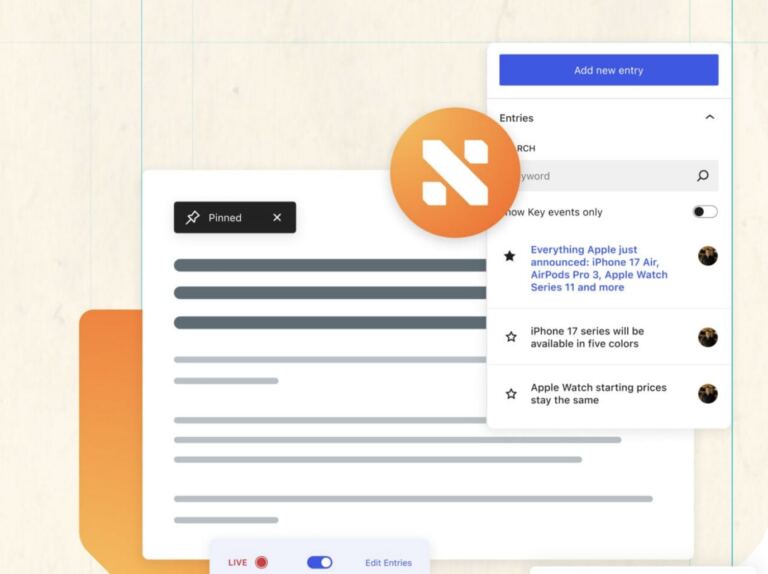
WP Engine Newsroom brings extra of that process into the WordPress surroundings. Content material groups can draft and edit content material, collaborate via feedback and @mentions, arrange assignments, and observe development via evaluation and approval.
As an alternative of again and again checking whether or not a draft is in a position, who owns your next step, or whether or not approval has been finished, groups can paintings with clearer visibility into the publishing procedure.
Translate governance into publishing controls
Use the governance matrix you’ve already constructed.
For each and every requirement, resolve whether or not Newsroom can flip it right into a workflow keep an eye on.
- Newsletter checklists can floor required tests by way of content material kind.
- Function-based get right of entry to can prohibit what other customers and groups are allowed to do.
- Approval workflows can constitute necessary resolution issues.
- Model historical past supplies visibility into adjustments between edits.
- Preview hyperlinks can convey stakeholders into evaluation with out essentially giving them complete WordPress get right of entry to.
The purpose isn’t including extra governance. It’s shifting governance you’ve already made up our minds is vital into the publishing procedure the place it may be carried out persistently.
Attach specialist publishing techniques
A attached publishing operation doesn’t require changing each present platform. DAMs, subscription techniques, analytics equipment, identification suppliers, and different specialist applied sciences would possibly nonetheless serve essential roles.
WP Engine Newsroom helps integrations with present publishing generation, permitting organizations to attach the ones techniques with editorial workflows in WordPress whilst keeping the functions they already rely on.
Attach content material efficiency again to editorial paintings
Dimension turns into extra helpful when it reaches the individuals who can act on it.
Newsroom brings content material and target market insights nearer to the WordPress publishing surroundings, together with visibility into content material efficiency and reader conduct.
That creates the chance to show the comments loop described previous into on a regular basis editorial follow. For instance, an editor investigating an evergreen article can use content-level proof to make a decision whether or not it wishes more potent construction, additional promotion, an replace, or eventual retirement.
An target market group can determine subjects or codecs related to more potent engagement. Commissioning selections can use proof from earlier content material reasonably than depending completely on instinct.
Scale back regimen dependency on building groups
WP Engine Newsroom is helping editorial groups arrange extra in their on a regular basis publishing paintings without delay in WordPress, decreasing the desire for developer help with regimen duties.
That permits generation groups to center of attention extra in their time on platform structure, integrations, safety, efficiency, and enhancements that surely require engineering experience.
Move deeper: What does WP Engine Newsroom do for WordPress venture publishers?
The way to map your content material operations blueprint to WP Engine Newsroom
In the event you’re comparing Newsroom, don’t get started with the function checklist. Take the artifacts you’ve made from this information into the analysis.
| Your artifact | What to check in Newsroom |
| Present-state workflow | Which handbook handoffs can transfer into WordPress? |
| Possession matrix | Can roles and permissions replicate precise duty? |
| Governance matrix | Can necessary controls transform checklists, permissions, or approvals? |
| Long run-state workflow | Can required phases and resolution issues be configured? |
| Stack audit | Which techniques stay, combine, or transform pointless? |
| Knowledge map | Can required knowledge transfer between Newsroom and specialist techniques? |
| KPI scorecard | Which operational/content material alerts can also be measured? |
| Scaling fashion | Can other groups/websites percentage requirements whilst keeping vital flexibility? |
Use the desk to steer a product analysis in accordance with your precise publishing necessities. Check consultant workflows, together with specialist approvals, exterior participants, governance tests, and integrations with present techniques.
The target is to know the way effectively Newsroom helps your running fashion in follow, now not merely whether or not it provides a specific function.
Take a more in-depth take a look at your choices
Get a sensible framework for comparing publishing platforms in opposition to your small business publishing necessities.
On the other hand, you’ll discover Newsroom’s adoption information or touch our group to speak about particular eventualities and platform alignment.
Regularly requested questions on content material operations
What does a content material operations group do?
A content material operations group designs and improves the machine at the back of content material manufacturing. Its tasks can come with workflow design, possession, governance, generation, integrations, documentation, dimension, automation, coaching, and procedure development. The precise remit is determined by how publishing tasks are allotted around the group.
What does a content material operations supervisor do?
A content material operations supervisor identifies operational friction and coordinates enhancements around the content material lifecycle. Conventional paintings contains mapping workflows, defining possession, keeping up publishing processes, comparing equipment, imposing automation, monitoring operational KPIs, documenting requirements, and coordinating adjustments throughout editorial, advertising and marketing, generation, prison, and different stakeholders.
Who must personal content material operations?
One serve as must have transparent duty, however content material operations must be designed cross-functionally. Possession would possibly sit down inside editorial, content material technique, virtual, advertising and marketing operations, or a devoted content material operations serve as. The landlord wishes sufficient authority to handle issues that go departmental limitations reasonably than optimizing just one group’s a part of the method.
What’s a content material operations platform?
A content material operations platform helps a couple of phases of the running fashion round content material, equivalent to making plans, workflow, collaboration, governance, publishing, dimension, and automation. Enterprises would possibly nonetheless use specialist techniques equivalent to DAMs, analytics platforms, identification suppliers, or subscription generation along the main publishing platform.
What’s the distinction between content material operations and content material advertising and marketing operations?
Content material advertising and marketing operations specializes in the processes required to execute content material advertising and marketing methods and campaigns. Content material operations is broader. It may well improve editorial, media, company communications, product, advertising and marketing, improve, and different publishing purposes around the entire content material lifecycle.
How lengthy does it take to put into effect content material operations?
There is not any common timeline as a result of content material operations isn’t a unmarried generation deployment. A group can audit and toughen one workflow inside weeks. Redesigning enterprise-wide workflows, governance, structure, integrations, and generation calls for a phased program. Get started with one high-impact workflow, identify a baseline, put into effect the alternate, and turn out the end result ahead of increasing.
What equipment are used for content material operations?
An ordinary stack can come with a CMS or publishing platform, editorial workflow equipment, DAM, analytics, Search engine marketing equipment, collaboration device, identification control, automation, AI techniques, and integrations with trade generation. The proper stack is the person who helps your running fashion with the least pointless duplication and handbook coordination.
How do you audit content material operations?
Make a choice 5 to 10 not too long ago revealed items and reconstruct what came about from preliminary request via newsletter. Report each proprietor, machine, handoff, approval, wait, handbook switch, requirement, and workaround. Measure time spent in each and every level, interview the folk concerned, and use routine friction—now not assumptions—to resolve what must alternate first.
How does content material operations paintings with WordPress?
WordPress can give you the content material control and publishing basis for the running fashion. Structured content material, blocks, roles, APIs, plugins, integrations, and multisite functions permit organizations to configure WordPress round other publishing necessities. Further workflow and operations functions can then prolong that basis for higher or extra complicated publishing groups.
Do you wish to have a content material operations platform?
Now not all the time. A small group with a simple publishing procedure could possibly arrange operations via WordPress and a small choice of supporting equipment. A devoted platform turns into extra treasured as content material quantity, participants, workflow phases, governance necessities, websites, integrations, and coordination necessities building up.
The submit What’s Content material Operations? Playbook for WordPress Publishers gave the impression first on WP Engine®.



0 Comments